
Managing Water Damage in Modernist Homes with Flat Roofs in Fridley
Flat roofs on mid-century modern homes in Fridley create unique water damage risks that homeowners often overlook until it’s too late. These sleek architectural features collect snow and ice during Minnesota winters, creating ponding water that slowly seeps through membrane seams and into your living space. The freeze-thaw cycles we experience in the Twin Cities area accelerate membrane deterioration, turning a small leak into thousands of dollars in structural damage within a single season. Immediate Water Damage Mitigation for Downtown Minneapolis Businesses.
The first sign of trouble often appears as a dark stain on your ceiling or a musty smell in your upper level. By then, moisture has already compromised your insulation and drywall. Water follows the path of least resistance, traveling along roof joists and pooling in unexpected areas. What started as a pinhole leak in your TPO membrane can result in warped hardwood floors, peeling paint, and even electrical hazards if left unaddressed.
Modernist homes in Fridley’s neighborhoods like North Park and Hayes typically feature EPDM or TPO membranes over tapered insulation boards. These materials perform well in our climate when properly maintained but fail quickly when drainage systems become blocked by leaves, ice, or debris. The flat design that looks so clean and modern also means water has nowhere to go when it accumulates, creating perfect conditions for slow leaks that go unnoticed for months.
Understanding these specific vulnerabilities is the first step toward protecting your home. The good news is that early detection and professional intervention can prevent minor issues from becoming major restoration projects. Let’s examine the common causes of flat roof leaks in our area and what you can do to address them before they cause extensive damage.
Common Causes of Flat Roof Leaks in the Twin Cities
Minnesota’s harsh climate creates several failure points for flat roof systems that homeowners in warmer regions never encounter. The freeze-thaw cycle we experience from November through March causes roofing materials to expand and contract repeatedly. This movement weakens seams, creates stress points around penetrations, and eventually leads to membrane failure.
Snow accumulation presents another significant challenge. A typical winter in Fridley can bring over 50 inches of snow, with individual storms dropping several feet at once. This weight load stresses the roof structure and creates ice dams along the edges where heat loss meets cold air. As snow melts during the day and refreezes at night, water backs up under roofing materials and finds its way into your home.
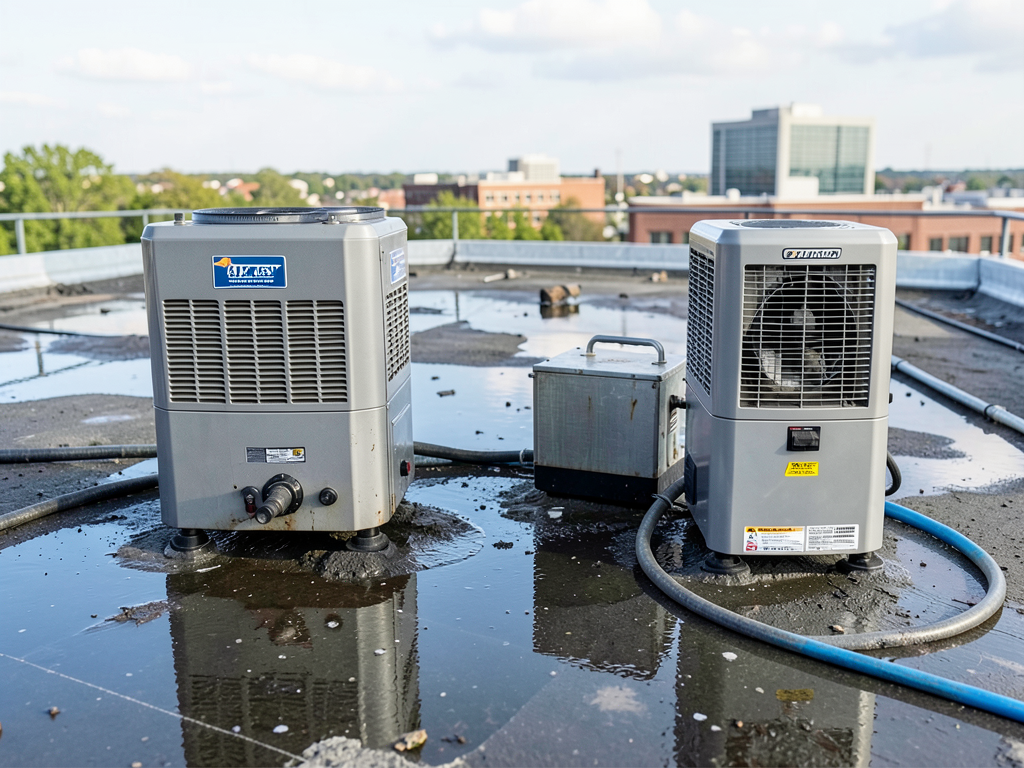
Ponding water represents one of the most insidious threats to flat roofs. When drainage systems become blocked by leaves, ice, or debris, water collects in low spots and remains there for days or weeks. This standing water accelerates membrane deterioration through UV exposure, biological growth, and chemical breakdown. A small area of ponding can reduce your roof’s lifespan by half if not corrected.
Penetrations through the roof membrane create additional vulnerability points. HVAC units, vent pipes, skylights, and electrical conduits all require flashing and sealing. These transition points are where most leaks develop, especially as materials age and sealants degrade. The movement caused by thermal expansion often pulls flashing away from the membrane, creating gaps that water exploits.
Human activity also contributes to roof damage. Walking on the membrane, dropping tools during maintenance, or allowing tree branches to scrape the surface all create micro-perforations that grow over time. These small punctures may not leak immediately but become entry points for water during heavy rains or snowmelt.
Our 5-Step Flat Roof Restoration & Drying Process
When water damage occurs in your Fridley home, quick action prevents further destruction. Our restoration process follows industry best practices established by the IICRC S500 standard for professional water damage restoration. Each step builds on the previous one to ensure complete moisture removal and prevent secondary damage like mold growth. IICRC S500 Standards.
The process begins with emergency containment. We arrive within 60 minutes of your call, assess the situation, and implement immediate measures to stop active leaks. This often involves tarping damaged areas, redirecting water flow, and protecting interior contents from further exposure. Quick response limits the spread of moisture and reduces overall restoration costs. Finding Fast Emergency Water Removal in the North Loop Neighborhood.
Next we conduct comprehensive moisture mapping using thermal imaging cameras and penetrating moisture meters. These tools reveal water migration patterns that aren’t visible to the naked eye. Water travels along structural members, collects in wall cavities, and wicks into porous materials. Our mapping identifies all affected areas, ensuring nothing gets missed during the drying process.
Water extraction follows moisture mapping. We use commercial-grade extractors to remove standing water from flat roof assemblies, ceiling cavities, and interior spaces. This step is critical because removing bulk water significantly reduces drying time and prevents secondary damage. Our equipment can extract water from carpeting, hardwood floors, and even concrete substrates. Repairing Interior Water Damage from Ice Dams in Minnetonka.
The drying phase employs industrial air movers and dehumidifiers positioned according to the specific conditions of your home. We create a balanced drying system that promotes evaporation while removing moisture from the air. Temperature and humidity are monitored continuously to ensure optimal drying conditions. This process typically takes 3-5 days depending on the extent of saturation.
Final restoration addresses structural repairs and cosmetic finishing. This includes replacing damaged drywall, refinishing floors, repainting surfaces, and repairing or replacing compromised roofing materials. We coordinate with your insurance company throughout this process, providing documentation and meeting their requirements for claim approval. EPA mold guidelines.
Why Minneapolis Weather is Brutal on Flat Roof Systems (TPO, EPDM, & Modified Bitumen)
The Twin Cities climate creates conditions that no flat roof material can truly withstand without eventual deterioration. Our temperature extremes range from -30°F in winter to over 90°F in summer, causing roofing materials to expand and contract dramatically. This thermal cycling weakens adhesives, causes seam separation, and creates stress points that lead to failure.
UV radiation in Minnesota is particularly intense due to our northern latitude and relatively clear skies. During summer months, UV rays break down the polymer chains in EPDM and TPO membranes, causing them to become brittle and crack. This degradation happens faster on flat surfaces because there’s no slope to help shed debris that can hold moisture against the membrane.
Ice formation presents unique challenges for flat roofs. When water freezes in low spots, it expands by approximately 9% in volume. This expansion forces membrane materials apart at seams and creates uplift pressure that can damage the entire roofing assembly. Multiple freeze-thaw cycles compound this damage, turning small defects into major failure points.
Snow load becomes a structural concern when accumulation exceeds the roof’s design capacity. Most residential flat roofs in Fridley are designed for 30-40 pounds per square foot of snow load, but heavy wet snow can approach or exceed these limits. The weight causes deflection in the roof structure, creating new low spots where water can pond and accelerate deterioration.
Wind uplift affects flat roofs differently than sloped roofs. High winds create pressure differentials that can lift membrane edges and flashing details. Once a small area becomes loose, wind can get underneath and cause progressive failure across large sections of the roof. This type of damage often occurs during spring storms when winds are strongest.
Moisture trapped within the roofing assembly causes its own set of problems. When insulation becomes wet, it loses its R-value and can lead to condensation issues within the building envelope. This trapped moisture also promotes biological growth and can cause rot in wooden structural members if not addressed promptly.
Dealing with Snow Load and Ice Dams on Commercial Flat Roofs
Commercial buildings in Fridley face additional challenges due to their larger roof areas and often more complex drainage systems. Snow accumulation on these structures can create dangerous conditions for both the building and anyone below. Understanding how to manage snow load and prevent ice dams is crucial for property owners.
Ice dams form when heat escaping from the building melts snow on the roof surface. This melted water runs down to the colder roof edge where it refreezes, creating a barrier that prevents proper drainage. On flat roofs, this process can create extensive ice buildup that forces water back up and under roofing materials, causing leaks inside the building.
Professional snow removal requires specialized equipment and techniques to avoid damaging the roofing membrane. Using sharp tools or applying excessive force can puncture the membrane, creating new leak points. We use plastic-edged roof rakes and carefully controlled heating elements to remove snow without causing additional damage to your roofing system.
Drainage system maintenance becomes critical during winter months. Roof drains, scuppers, and downspouts must remain clear of ice and debris to allow proper water flow. When these systems become blocked, water backs up and creates ponding areas that freeze and expand, causing further damage to the roofing assembly.
Heat tape installation along roof edges and around penetrations can prevent ice dam formation in problem areas. These electrical heating elements maintain temperatures above freezing, allowing water to drain freely rather than refreezing at the roof edge. Proper installation requires understanding your roof’s specific drainage patterns and heat loss characteristics.
Structural monitoring helps identify when snow load becomes dangerous. We use laser levels and other measurement tools to track roof deflection during heavy snow events. If deflection exceeds acceptable limits, immediate snow removal becomes necessary to prevent structural failure. This monitoring is especially important for older buildings or those with known structural issues.
Navigating Insurance Claims for Water Damage in Minnesota
Water damage from flat roof leaks creates unique challenges when filing insurance claims in Minnesota. Most standard homeowners policies cover sudden and accidental water damage but exclude damage from long-term neglect or maintenance issues. Understanding where your specific situation falls within these parameters can significantly impact your claim outcome.
Documentation becomes your most powerful tool when dealing with insurance adjusters. We provide detailed damage assessments, moisture mapping reports, and photographic evidence that establishes the extent and cause of your water damage. This documentation helps demonstrate that the damage resulted from a covered event rather than poor maintenance. Dealing with Sewage Backup Cleanup in Your Bloomington Home.
Timing matters significantly in water damage claims. Most policies require prompt reporting of damage, typically within 14-30 days of discovery. Waiting too long can give insurers grounds to deny your claim based on delayed reporting. Our 24/7 emergency response ensures you meet these reporting requirements while also preventing further damage.
Minnesota state regulations require insurance companies to handle claims in good faith, but understanding your rights helps you navigate the process more effectively. The Minnesota Department of Commerce oversees insurance practices and can assist if you encounter unfair claim handling. We’ve worked with countless adjusters and understand what documentation they need to approve your claim quickly.
Scope of loss determination often becomes contentious in water damage claims. Insurance companies may try to limit coverage to visible damage while excluding secondary issues like mold growth or structural deterioration. Our comprehensive assessments identify all damage, including hidden moisture that could cause problems later if not properly addressed.
Depreciation calculations affect how much you ultimately receive from your claim. Insurance companies factor in the age and condition of damaged materials when determining replacement value. Understanding these calculations helps you make informed decisions about repairs versus replacements and ensures you receive fair compensation for your loss.
Flat Roof Repair vs. Total Replacement: How to Decide
Deciding between repairing your existing flat roof or replacing it entirely depends on several factors specific to your situation. Age represents the most significant consideration. Most flat roofing systems have a useful life of 20-30 years depending on the material and maintenance history. If your roof is approaching or exceeding this age, replacement often makes more financial sense.
Extent of damage plays a crucial role in this decision. Localized damage from a single event may be repairable, but widespread deterioration indicates systemic problems that repairs won’t solve. We use moisture mapping and core sampling to determine whether damage is isolated or pervasive throughout the roofing assembly.
Current roofing material affects repair viability. EPDM and TPO membranes can be patched effectively if the damage is limited and the surrounding material is still in good condition. However, modified bitumen and built-up roofing systems often develop widespread issues that make spot repairs ineffective in the long term.
Energy efficiency considerations may favor replacement even when repairs seem adequate. Modern roofing materials offer significantly better insulation values and reflective properties that can reduce heating and cooling costs. The energy savings over time can offset much of the replacement cost, especially in Minnesota’s extreme climate.
Building code requirements may necessitate replacement rather than repair. Minneapolis and surrounding communities have adopted building codes that mandate specific R-values for roof insulation and require certain materials in high-wind or high-snow-load areas. If your existing roof doesn’t meet current codes, repairs may trigger requirements for full replacement.
Future plans for the building influence this decision as well. If you’re planning to sell within a few years, a new roof can significantly increase property value and marketability. Conversely, if you plan to stay long-term, investing in a high-quality replacement with modern materials often provides better long-term value than repeated repairs.
Frequently Asked Questions
How can I tell if my flat roof has water damage?
Look for water stains on ceilings or walls, musty odors in upper levels, peeling paint or wallpaper, and visible sagging in ceiling areas. You might also notice increased energy bills due to wet insulation losing its R-value. If you see any of these signs, call for a professional inspection immediately.
How long does flat roof water damage restoration take?
The restoration timeline varies based on damage extent, but most projects take 3-7 days from start to finish. Emergency containment happens within hours of your call. Moisture mapping and water extraction typically require one day. The drying process takes 3-5 days, followed by restoration work which depends on the repairs needed.
Will my insurance cover flat roof water damage?
Most homeowners policies cover sudden and accidental water damage from roof leaks. However, damage from neglect or lack of maintenance is typically excluded. We can help you understand your coverage and provide the documentation insurance companies need to process your claim efficiently.
Can I repair a flat roof leak myself?
Small, accessible leaks might be temporarily patched, but professional repair ensures the underlying cause is addressed. DIY repairs often fail because they don’t address moisture that has already penetrated the roofing assembly. Professional restoration includes moisture detection, proper drying, and repairs that prevent future leaks.
How often should flat roofs be inspected?
We recommend professional inspections twice yearly, in spring and fall, plus after any major storm. Regular inspections catch problems early when they’re less expensive to fix. Between professional inspections, visually check your roof after heavy rains or snow melts for signs of ponding or damage.
[IMAGE_PLACEHCASE_1]
Protect Your Fridley Home from Flat Roof Water Damage
Water damage from flat roof leaks creates expensive problems that multiply quickly in Fridley’s climate. The combination of heavy snow loads, ice dam formation, and freeze-thaw cycles means your modernist home needs proactive care to prevent costly restoration projects. Early detection and professional intervention can save you thousands of dollars and prevent the stress of extensive home repairs.
Our team understands the unique challenges that Fridley’s mid-century modern homes face. We’ve restored countless properties in neighborhoods like North Park and Hayes, dealing with everything from minor membrane repairs to complete roof replacements. We bring the right equipment, expertise, and local knowledge to handle your specific situation effectively. Expert Mold Remediation for Older Apartments in Uptown Minneapolis.
Don’t wait until water stains appear on your ceiling or your hardwood floors start warping. If you suspect your flat roof has a leak or if you’ve noticed any signs of water damage, call (651) 677-5055 today. Our 24/7 emergency response team will arrive quickly to assess the situation and implement immediate containment measures to prevent further damage to your home.
Pick up the phone and call (651) 677-5055 before the next storm hits. Minnesota weather waits for no one, and a small leak today can become a major restoration project tomorrow. Let our experienced team protect your investment and restore your home to its original condition quickly and professionally.
{
“@context”: “https://schema.org”,
“@type”: “BlogPosting”,
“headline”: “Managing Water Damage in Modernist Homes with Flat Roofs in Fridley”,
“description”: “Flat roofs in Fridley’s modernist homes face unique water damage risks from ice dams and ponding water. Learn how to spot leaks and protect your home.”,
“wordCount”: 2742,
“datePublished”: “2026-03-26T09:12:00.000Z”,
“dateModified”: “2026-03-26T09:12:00.000Z”,
“inLanguage”: “en-US”,
“mainEntityOfPage”: {
“@type”: “WebPage”,
“@id”: “https://pioneerwaterdamagerestorationminneapolis.com”
},
“publisher”: {
“@type”: “LocalBusiness”,
“name”: “Pioneer Water Damage Restoration Minneapolis”,
“url”: “https://pioneerwaterdamagerestorationminneapolis.com”
},
“author”: {
“@type”: “Organization”,
“name”: “Pioneer Water Damage Restoration Minneapolis”,
“url”: “https://pioneerwaterdamagerestorationminneapolis.com”
},
“image”: {
“@type”: “ImageObject”,
“url”: “https://pioneerwaterdamagerestorationminneapolis.com/wp-content/uploads/2026/03/managing-water-damage-in-modernist-homes-with-flat-1.png”
}
}
{
“@context”: “https://schema.org”,
“@type”: “LocalBusiness”,
“name”: “Pioneer Water Damage Restoration Minneapolis”,
“url”: “https://pioneerwaterdamagerestorationminneapolis.com”,
“address”: {
“@type”: “PostalAddress”,
“addressLocality”: “Minneapolis”
},
“areaServed”: {
“@type”: “City”,
“name”: “Minneapolis”
}
}
{
“@context”: “https://schema.org”,
“@type”: “FAQPage”,
“mainEntity”: [
{
“@type”: “Question”,
“name”: “How can I tell if my flat roof has water damage?”,
“acceptedAnswer”: {
“@type”: “Answer”,
“text”: “Look for water stains on ceilings or walls, musty odors in upper levels, peeling paint or wallpaper, and visible sagging in ceiling areas. You might also notice increased energy bills due to wet insulation losing its R-value. If you see any of these signs, call for a professional inspection immediately.”
}
},
{
“@type”: “Question”,
“name”: “How long does flat roof water damage restoration take?”,
“acceptedAnswer”: {
“@type”: “Answer”,
“text”: “The restoration timeline varies based on damage extent, but most projects take 3-7 days from start to finish. Emergency containment happens within hours of your call. Moisture mapping and water extraction typically require one day. The drying process takes 3-5 days, followed by restoration work which depends on the repairs needed.”
}
},
{
“@type”: “Question”,
“name”: “Will my insurance cover flat roof water damage?”,
“acceptedAnswer”: {
“@type”: “Answer”,
“text”: “Most homeowners policies cover sudden and accidental water damage from roof leaks. However, damage from neglect or lack of maintenance is typically excluded. We can help you understand your coverage and provide the documentation insurance companies need to process your claim efficiently.”
}
},
{
“@type”: “Question”,
“name”: “Can I repair a flat roof leak myself?”,
“acceptedAnswer”: {
“@type”: “Answer”,
“text”: “Small, accessible leaks might be temporarily patched, but professional repair ensures the underlying cause is addressed. DIY repairs often fail because they don’t address moisture that has already penetrated the roofing assembly. Professional restoration includes moisture detection, proper drying, and repairs that prevent future leaks.”
}
},
{
“@type”: “Question”,
“name”: “How often should flat roofs be inspected?”,
“acceptedAnswer”: {
“@type”: “Answer”,
“text”: “We recommend professional inspections twice yearly, in spring and fall, plus after any major storm. Regular inspections catch problems early when they’re less expensive to fix. Between professional inspections, visually check your roof after heavy rains or snow melts for signs of ponding or damage.”
}
}
]
}
{
“@context”: “https://schema.org”,
“@type”: “BreadcrumbList”,
“itemListElement”: [
{
“@type”: “ListItem”,
“position”: 1,
“name”: “Home”,
“item”: “https://pioneerwaterdamagerestorationminneapolis.com”
},
{
“@type”: “ListItem”,
“position”: 2,
“name”: “Blog”,
“item”: “https://pioneerwaterdamagerestorationminneapolis.com/blog”
},
{
“@type”: “ListItem”,
“position”: 3,
“name”: “Managing Water Damage in Modernist Homes with Flat Roofs in Fridley”
}
]
}
{
“@context”: “https://schema.org”,
“@type”: “Service”,
“serviceType”: “Water Damage Restoration”,
“provider”: {
“@type”: “LocalBusiness”,
“name”: “Pioneer Water Damage Restoration Minneapolis”,
“url”: “https://pioneerwaterdamagerestorationminneapolis.com”
},
“areaServed”: {
“@type”: “City”,
“name”: “Minneapolis”
},
“description”: “Flat roofs in Fridley’s modernist homes face unique water damage risks from ice dams and ponding water. Learn how to spot leaks and protect your home.”
}