Restoring Wet Plaster Walls Without Ruining the Character of Your Tangletown Home
Wet plaster walls in Tangletown homes require specialized restoration techniques that generic drywall methods cannot provide. The historic character of these 1920s-1940s homes depends on preserving original materials while properly addressing water damage. This guide explains the science behind plaster drying and the specific methods that work for Minneapolis’s unique climate and construction patterns. Minneapolis building codes.
Plaster walls absorb water differently than modern drywall. The dense gypsum plaster and wood lath system holds moisture deep within the material structure creating hidden pockets that standard fans cannot reach. Without proper drying techniques trapped moisture leads to mold growth structural weakening and the loss of historical integrity that makes Tangletown homes valuable. Immediate Water Damage Mitigation for Downtown Minneapolis Businesses.
Understanding Tangletown’s Plaster Construction
Tangletown’s residential architecture features predominantly wood lath plaster systems from the early 20th century. These walls consist of narrow wood strips nailed to wall studs with multiple layers of plaster applied over them. The plaster forms keys that lock into the gaps between lath strips creating a strong mechanical bond. This construction method differs significantly from modern drywall installation.
The wood lath system presents unique challenges when wet. Wood expands when absorbing water potentially causing the plaster keys to break loose. Metal lath systems common in later renovations conduct moisture differently and require distinct drying approaches. Understanding which system exists in your home determines the appropriate restoration method.. Read more about How to Save Your Rare Book Collection After a Water Leak in Your Deephaven Home Library.
Initial Response to Water Damage
Time becomes critical when plaster walls get wet. The first 24-48 hours determine whether restoration succeeds or requires complete replacement. Safety takes priority: shut off electricity to affected areas before touching wet walls. Water conducts electricity through plaster creating shock hazards even when outlets appear dry.
Document damage thoroughly with photos before beginning any cleanup. Insurance companies require evidence of pre-restoration conditions. Remove standing water using wet vacuums or mops but avoid aggressive scrubbing that could damage the plaster surface. Open windows when outdoor humidity permits but understand that Minneapolis’s high summer humidity often makes outdoor air worse than indoor conditions.
The Science of Plaster Moisture Content
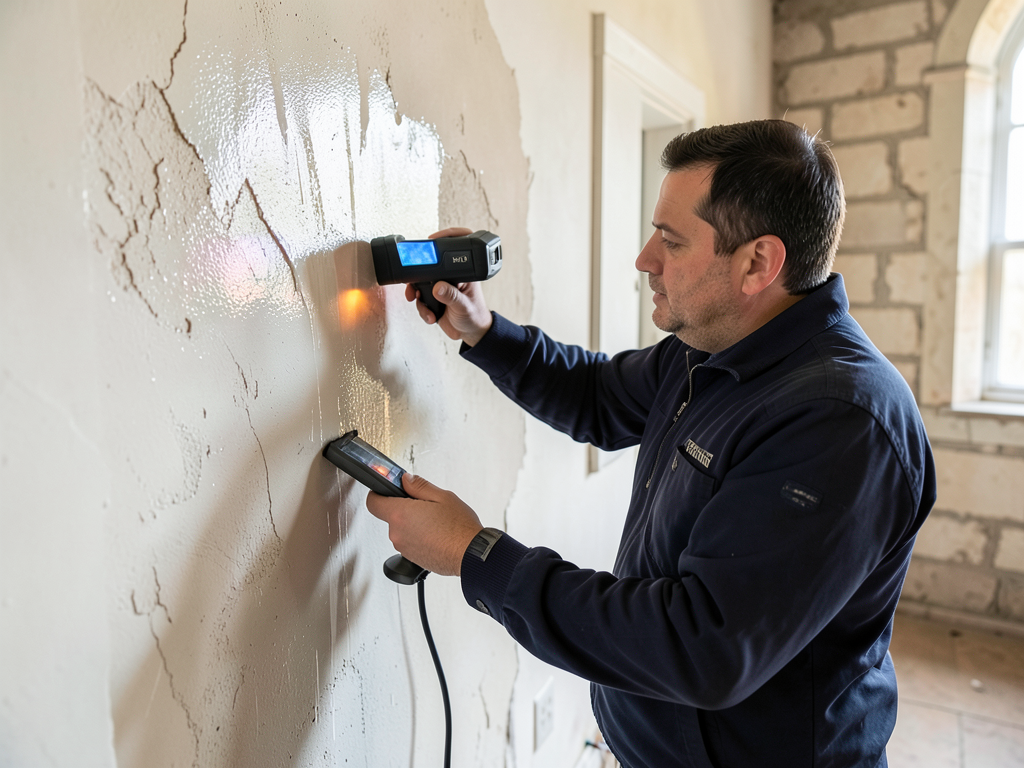
Professional restoration requires measuring moisture content in both plaster and wood lath. Standard moisture meters read only surface levels missing deep moisture pockets that cause long-term problems. Penetrating moisture meters with deep probes measure moisture at different depths within the wall assembly.
Plaster reaches structural failure when moisture content exceeds 18-20% in the wood lath and 15-17% in the plaster itself. These thresholds vary based on temperature and humidity conditions. Minneapolis’s climate creates additional complications: summer humidity slows evaporation while winter freezing can cause plaster to crack as trapped moisture expands.
Professional restoration technicians use psychrometric calculations to determine optimal drying conditions. The process involves measuring grains of moisture per pound of dry air and adjusting temperature and humidity to maximize evaporation without causing secondary damage. This scientific approach differs fundamentally from simply placing fans in a room.
Professional Drying Equipment for Plaster Walls
Standard restoration equipment cannot effectively dry plaster walls. The dense material requires specialized Low Grain Refrigerant (LGR) dehumidifiers that remove more moisture per air volume than conventional units. These machines achieve dew points below 40°F extracting water vapor that standard dehumidifiers leave behind.
Axial air movers create directional airflow that pushes moisture out of plaster pores. Unlike standard fans that circulate air randomly axial movers generate focused streams that penetrate wall cavities. Technicians position these units to create pressure differentials that draw moisture from deep within the plaster matrix.
Desiccant dehumidifiers offer another option for severe cases. These units use silica gel to absorb moisture from the air achieving humidity levels as low as 10% relative humidity. While energy-intensive desiccants can dry plaster walls that resist conventional methods particularly in Minneapolis’s humid summer conditions.
Hidden Mold Risks in Plaster Systems
Plaster walls create ideal conditions for hidden mold growth. The wood lath provides organic material for mold colonization while the dense plaster restricts airflow that would normally inhibit growth. Mold can establish colonies within 24-48 hours of water exposure even when walls appear to be drying properly.
Minneapolis’s climate exacerbates mold risks. Summer humidity levels often exceed 70% providing ideal conditions for mold spores to multiply. Winter conditions create different problems: frozen moisture expands creating cracks that allow mold to establish in previously dry areas. The freeze-thaw cycle common to Minneapolis accelerates plaster deterioration when moisture is present.
Professional mold testing involves air sampling and surface swabs to detect colonies before they become visible. Laboratory analysis identifies specific mold species and determines appropriate remediation strategies. Some mold species produce mycotoxins that pose health risks requiring specialized containment procedures during removal. Expert Mold Remediation for Older Apartments in Uptown Minneapolis.
Minneapolis Building Code Considerations
Minneapolis building codes require specific procedures when restoring plaster in pre-1978 homes. Minnesota Statute 144.0385 mandates lead-safe practices when disturbing painted surfaces in older buildings. Many Tangletown homes contain lead-based paint beneath plaster layers creating exposure risks during restoration. Minnesota Department of Health.
The Minnesota Department of Health provides guidelines for lead-safe renovation practices. These include using HEPA-filtered vacuums establishing containment barriers and proper disposal of contaminated materials. Non-compliance can result in fines up to $1000 per violation and potential liability for lead exposure.
Minneapolis plumbing code Section 420.0 addresses water damage restoration requirements. The code mandates proper moisture barrier installation and requires documentation of drying verification before reconstruction begins. Insurance companies often require code compliance documentation before processing claims.
Cost-Benefit Analysis Restoration vs Replacement
Restoring original plaster typically costs 40-60% less than complete replacement. New plaster installation requires skilled craftsmen who charge premium rates in the Twin Cities area. Finding contractors who can match original plaster textures and finishes adds significant expense to replacement projects. Finding Fast Emergency Water Removal in the North Loop Neighborhood.
Restoration preserves architectural authenticity that increases property values. Tangletown homes with original plaster walls command higher prices than those with modern drywall installations. The National Park Service recognizes original plaster as a character-defining feature in historic preservation evaluations. National Park Service.
Insurance coverage varies significantly between restoration and replacement scenarios. Most policies cover water damage restoration but may exclude upgrades to current building standards. Understanding policy limitations before beginning work prevents unexpected expenses.
Common Plaster Failure Patterns in Minneapolis
Ice dam formation causes widespread plaster damage in Tangletown homes each winter. Melting snow refreezes at roof edges creating ice dams that force water under shingles and into wall cavities. The water travels down wall assemblies saturating plaster from the top down.. Read more about Why Stucco Homes in Falcon Heights Are Prone to Hidden Water Intrusions.
Burst pipes represent another common failure pattern. Minneapolis’s extreme temperature variations cause pipe expansion and contraction. When freezing occurs water expands by approximately 9% volume generating pressures exceeding 2000 psi that rupture pipe walls. The resulting water discharge can flood entire wall sections within hours.
Foundation seepage affects basement-level plaster walls. Minneapolis’s clay soil expands when wet creating hydrostatic pressure against foundation walls. This pressure forces water through hairline cracks saturating plaster from the bottom up. The slow continuous nature of seepage often causes more damage than sudden flooding.
Professional Assessment Techniques
Thermal imaging cameras detect moisture patterns invisible to the naked eye. These devices measure infrared radiation emitted by materials with wet areas showing different temperatures than dry ones. Professional thermal imaging reveals moisture migration paths and identifies hidden water pockets behind plaster surfaces.
Moisture mapping involves systematic testing throughout affected areas. Technicians create grid patterns on walls and record moisture readings at each point. This data creates moisture content maps that guide drying equipment placement and verify when restoration targets have been achieved.
Acoustic testing helps locate delamination points where plaster has separated from lath. Technicians tap wall surfaces and listen for hollow sounds indicating lost adhesion. This non-destructive testing identifies areas requiring special attention during drying or areas where plaster replacement becomes necessary.
Restoration Timeline Expectations
Plaster wall drying typically requires 4-7 days under optimal conditions. This timeline extends significantly when dealing with multiple wall layers insulation presence or severe saturation. Minneapolis’s climate affects drying times: summer humidity can double drying durations compared to winter conditions. Dealing with Sewage Backup Cleanup in Your Bloomington Home.
The restoration process follows specific phases. Initial moisture extraction removes free water within 24-48 hours. Evaporation phase draws moisture from plaster pores over 2-4 days. Equilibrium phase stabilizes moisture content across the entire wall assembly preventing differential shrinkage that causes cracking.
Post-drying verification ensures restoration success. Technicians conduct final moisture readings air quality testing and visual inspections. Documentation of these results satisfies insurance requirements and provides baseline data for future reference if problems develop.
Preventing Future Water Damage
Roof maintenance prevents many plaster water damage scenarios. Annual inspections identify missing shingles damaged flashing or inadequate ice dam protection. Minneapolis roofing code requires specific ice dam prevention measures for homes in areas with heavy snowfall.
Plumbing system upgrades reduce burst pipe risks. Modern PEX piping expands without rupturing when frozen unlike rigid copper or galvanized steel. Temperature monitoring systems can detect abnormal drops that precede freezing allowing preventive measures before damage occurs.
Foundation waterproofing addresses seepage issues. Exterior waterproofing membranes proper grading and functional gutter systems direct water away from foundation walls. Interior drainage systems provide backup protection when exterior measures prove insufficient. Repairing Interior Water Damage from Ice Dams in Minnetonka.
Choosing the Right Restoration Partner
Professional restoration requires specific expertise in historic plaster systems. General contractors often lack understanding of plaster’s unique properties and restoration requirements. Look for technicians certified in water damage restoration through organizations like the IICRC.
Experience with Minneapolis-area homes proves essential. Local contractors understand regional construction patterns climate challenges and building code requirements. They maintain relationships with specialized subcontractors when restoration requires skills beyond general water damage remediation.
Insurance coordination capabilities streamline the restoration process. Professional restoration companies document damage communicate with adjusters and ensure work meets policy requirements. This expertise often determines whether claims process smoothly or encounter delays and disputes.
Frequently Asked Questions
How long can wet plaster sit before permanent damage occurs?
Plaster walls begin deteriorating within 24-48 hours of water exposure. Mold growth starts within this timeframe while plaster delamination becomes likely after 72 hours. Immediate professional assessment provides the best chance for successful restoration.
Can I dry plaster walls myself using fans and dehumidifiers?
Consumer-grade equipment cannot effectively dry plaster walls. The dense material requires professional-grade dehumidifiers and specialized airflow patterns. DIY attempts often result in incomplete drying leading to mold growth and structural damage that costs more to repair than professional restoration.
How do I know if my plaster walls contain asbestos or lead?
Homes built before 1978 likely contain lead-based paint beneath plaster layers. Asbestos was used in some plaster formulations through the 1970s. Professional testing determines material composition before restoration begins ensuring compliance with safety regulations.
What’s the difference between plaster and drywall drying times?
Plaster walls require 4-7 days to dry completely while drywall typically dries in 24-48 hours. Plaster’s density and multiple-layer construction trap moisture deeper than drywall’s single gypsum core. This difference makes plaster restoration more complex and time-consuming.
Will insurance cover plaster restoration or only replacement?
Most insurance policies cover water damage restoration to pre-loss condition. However coverage varies based on policy terms and damage extent. Some policies exclude upgrades to current building standards potentially leaving owners responsible for code compliance improvements.
How can I prevent ice dam damage to plaster walls?
Proper attic insulation and ventilation prevent ice dam formation. Minneapolis building code requires specific R-value insulation and ventilation ratios to minimize heat loss through roofs. Professional roof inspections identify vulnerabilities before winter weather creates problems.
Conclusion
Restoring wet plaster walls requires understanding the unique properties of historic construction materials and the specific challenges posed by Minneapolis’s climate. The dense multi-layer nature of plaster walls demands professional-grade equipment and techniques that consumer products cannot provide. Success depends on rapid response proper moisture assessment and systematic drying protocols.
Tangletown homeowners face particular challenges due to the neighborhood’s concentration of historic properties with original plaster walls. The investment in professional restoration typically costs less than replacement while preserving the architectural character that makes these homes valuable. Understanding the science behind plaster drying helps homeowners make informed decisions when water damage occurs.
Don’t let water damage destroy the character of your Tangletown home. Call (651) 677-5055 today to schedule your inspection. Our certified technicians understand the unique requirements of historic plaster restoration and can save your walls when others might recommend replacement.
Pick up the phone and call (651) 677-5055 before the next storm hits. Water damage waits for no one but professional restoration can save your plaster walls and preserve your home’s historic character.
{
“@context”: “https://schema.org”,
“@type”: “BlogPosting”,
“headline”: “Restoring Wet Plaster Walls Without Ruining the Character of Your Tangletown Home”,
“description”: “Professional plaster restoration for Tangletown’s historic homes. Learn why DIY drying fails and how our specialized equipment saves your walls.”,
“wordCount”: 2115,
“datePublished”: “2026-05-04T07:37:00.000Z”,
“dateModified”: “2026-05-04T07:37:00.000Z”,
“inLanguage”: “en-US”,
“mainEntityOfPage”: {
“@type”: “WebPage”,
“@id”: “https://pioneerwaterdamagerestorationminneapolis.com”
},
“publisher”: {
“@type”: “LocalBusiness”,
“name”: “Pioneer Water Damage Restoration Minneapolis”,
“url”: “https://pioneerwaterdamagerestorationminneapolis.com”
},
“author”: {
“@type”: “Organization”,
“name”: “Pioneer Water Damage Restoration Minneapolis”,
“url”: “https://pioneerwaterdamagerestorationminneapolis.com”
},
“image”: {
“@type”: “ImageObject”,
“url”: “https://pioneerwaterdamagerestorationminneapolis.com/wp-content/uploads/2026/03/restoring-wet-plaster-walls-without-ruining-the-ch-1.png”
}
}
{
“@context”: “https://schema.org”,
“@type”: “LocalBusiness”,
“name”: “Pioneer Water Damage Restoration Minneapolis”,
“url”: “https://pioneerwaterdamagerestorationminneapolis.com”,
“address”: {
“@type”: “PostalAddress”,
“addressLocality”: “Minneapolis”
},
“areaServed”: {
“@type”: “City”,
“name”: “Minneapolis”
}
}
{
“@context”: “https://schema.org”,
“@type”: “FAQPage”,
“mainEntity”: [
{
“@type”: “Question”,
“name”: “How long can wet plaster sit before permanent damage occurs?”,
“acceptedAnswer”: {
“@type”: “Answer”,
“text”: “Plaster walls begin deteriorating within 24-48 hours of water exposure. Mold growth starts within this timeframe while plaster delamination becomes likely after 72 hours. Immediate professional assessment provides the best chance for successful restoration.”
}
},
{
“@type”: “Question”,
“name”: “Can I dry plaster walls myself using fans and dehumidifiers?”,
“acceptedAnswer”: {
“@type”: “Answer”,
“text”: “Consumer-grade equipment cannot effectively dry plaster walls. The dense material requires professional-grade dehumidifiers and specialized airflow patterns. DIY attempts often result in incomplete drying leading to mold growth and structural damage that costs more to repair than professional restoration.”
}
},
{
“@type”: “Question”,
“name”: “How do I know if my plaster walls contain asbestos or lead?”,
“acceptedAnswer”: {
“@type”: “Answer”,
“text”: “Homes built before 1978 likely contain lead-based paint beneath plaster layers. Asbestos was used in some plaster formulations through the 1970s. Professional testing determines material composition before restoration begins ensuring compliance with safety regulations.”
}
},
{
“@type”: “Question”,
“name”: “What’s the difference between plaster and drywall drying times?”,
“acceptedAnswer”: {
“@type”: “Answer”,
“text”: “Plaster walls require 4-7 days to dry completely while drywall typically dries in 24-48 hours. Plaster’s density and multiple-layer construction trap moisture deeper than drywall’s single gypsum core. This difference makes plaster restoration more complex and time-consuming.”
}
},
{
“@type”: “Question”,
“name”: “Will insurance cover plaster restoration or only replacement?”,
“acceptedAnswer”: {
“@type”: “Answer”,
“text”: “Most insurance policies cover water damage restoration to pre-loss condition. However coverage varies based on policy terms and damage extent. Some policies exclude upgrades to current building standards potentially leaving owners responsible for code compliance improvements.”
}
},
{
“@type”: “Question”,
“name”: “How can I prevent ice dam damage to plaster walls?”,
“acceptedAnswer”: {
“@type”: “Answer”,
“text”: “Proper attic insulation and ventilation prevent ice dam formation. Minneapolis building code requires specific R-value insulation and ventilation ratios to minimize heat loss through roofs. Professional roof inspections identify vulnerabilities before winter weather creates problems.”
}
}
]
}
{
“@context”: “https://schema.org”,
“@type”: “BreadcrumbList”,
“itemListElement”: [
{
“@type”: “ListItem”,
“position”: 1,
“name”: “Home”,
“item”: “https://pioneerwaterdamagerestorationminneapolis.com”
},
{
“@type”: “ListItem”,
“position”: 2,
“name”: “Blog”,
“item”: “https://pioneerwaterdamagerestorationminneapolis.com/blog”
},
{
“@type”: “ListItem”,
“position”: 3,
“name”: “Restoring Wet Plaster Walls Without Ruining the Character of Your Tangletown Home”
}
]
}
{
“@context”: “https://schema.org”,
“@type”: “Service”,
“serviceType”: “Water Damage Restoration”,
“provider”: {
“@type”: “LocalBusiness”,
“name”: “Pioneer Water Damage Restoration Minneapolis”,
“url”: “https://pioneerwaterdamagerestorationminneapolis.com”
},
“areaServed”: {
“@type”: “City”,
“name”: “Minneapolis”
},
“description”: “Professional plaster restoration for Tangletown’s historic homes. Learn why DIY drying fails and how our specialized equipment saves your walls.”
}