
Safely Drying Out a Wet Garage After Heavy Rain in Cottage Grove
When heavy rain hits Cottage Grove, many homeowners find themselves staring at a flooded garage floor. The first 24 hours are critical for preventing permanent damage to your concrete, stored belongings, and the structure beneath your garage. Acting quickly with the right techniques can mean the difference between a simple cleanup and costly repairs to your foundation or mold remediation. EPA Mold Resources.
Garage flooding in Cottage Grove typically occurs when stormwater overwhelms drainage systems or when the water table rises during prolonged rainfall. The porous nature of concrete means water doesn’t just sit on the surface—it seeps into the slab, the sub-base, and can travel through foundation walls. Without proper extraction and drying, you risk efflorescence, spalling, and mold growth within 48-72 hours. Immediate Water Damage Mitigation for Downtown Minneapolis Businesses.
Before grabbing towels or a household vacuum, understand that garage water damage requires specific safety protocols. Electrical hazards, contaminated water from street runoff, and the weight of saturated materials all create risks that most homeowners aren’t prepared for. This guide walks you through immediate safety steps, explains when DIY methods work, and shows when professional water damage restoration becomes necessary.. Read more about Restoring Your Orono Boat House After Severe Lakefront Flooding.
Call (651) 677-5055 today to schedule your inspection.
Common Causes of Garage Flooding in Cottage Grove
Cottage Grove’s location along the Mississippi River and its clay-heavy soil create unique drainage challenges. During heavy rain events, water accumulates faster than the ground can absorb it, especially in neighborhoods near Valley Creek Road and Jamaica Avenue where the terrain slopes toward the river valley.
Sump pump failure represents the most common cause of garage flooding in Cottage Grove homes. Many properties in the 55016 zip code rely on sump systems to keep groundwater away from foundations. When power fails during storms or pumps age beyond their 7-10 year lifespan, water backs up through floor drains and seeps through concrete cracks.. Read more about Dealing with Emergency Flood Cleanup in Inver Grove Heights After a Storm.
Surface water intrusion occurs when driveway grading directs rainwater toward garage doors. Homes built before 2000 often lack proper drainage swales, allowing water to pool against garage walls. The freeze-thaw cycles common to Cottage Grove cause concrete expansion and contraction, creating hairline cracks that widen over time and provide entry points for water.. Read more about How to Dry Out a Wet Garage in Crystal After a Heavy Downpour.
Roof drainage problems compound these issues. Clogged gutters or downspouts that discharge too close to the foundation send hundreds of gallons of water against garage walls during heavy rainfall. The Minnesota Department of Transportation’s road salt application in winter also contributes to concrete deterioration, making older garage floors more susceptible to water infiltration.
Hydrostatic pressure builds when the water table rises above the level of your garage floor. In Cottage Grove’s low-lying areas near Grey Cloud Island, this pressure can force water through the slab itself, creating what appears to be a rising water table inside your garage.
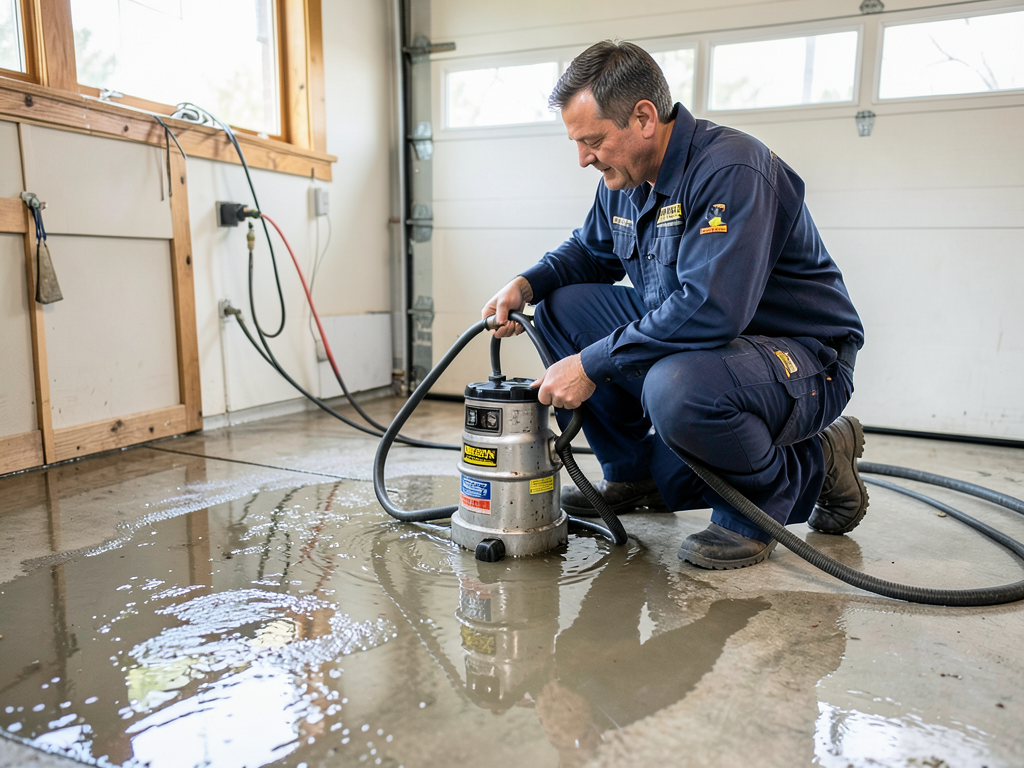
Image: Diagram showing how hydrostatic pressure forces water through concrete garage floors during heavy rainfall events in Cottage Grove.
Immediate Steps: What to Do Before the Professionals Arrive
Safety comes first when dealing with garage flooding. Before entering the space, check for downed power lines or electrical hazards. If water has reached electrical outlets, extension cords, or your garage door opener, do not enter until power is disconnected at the breaker box. Dealing with Sewage Backup Cleanup in Your Bloomington Home.
Wear rubber boots and gloves to protect against contaminated water. Street runoff and groundwater can contain bacteria, chemicals, and debris that pose health risks. If the water smells like sewage or has a dark color, assume it contains hazardous materials and avoid direct contact.
Start by removing vehicles and movable items from the garage. Water accelerates rust and corrosion, so even if items appear dry on the surface, they may have absorbed moisture. Place wet items in a dry, well-ventilated area to begin air drying.
Document the damage for insurance purposes. Take photos and videos before starting cleanup, showing the water depth and affected areas. Most homeowner’s policies cover sudden water damage, but documentation speeds up claims processing.
Use a wet-dry vacuum to remove standing water if you have one available. Household vacuums are not designed for water and create electrical hazards. For water deeper than one inch, multiple extraction passes are necessary as concrete continues to release absorbed water.
Open garage doors and windows to increase air circulation. However, if outdoor humidity exceeds 60%, keep doors closed to prevent additional moisture from entering. Use fans to create airflow across wet surfaces, but avoid pointing fans directly at electrical components.
Check floor drains for blockages. Leaves, dirt, and debris often clog garage drains during storms. Clear visible obstructions, but if water isn’t draining, the issue may be a collapsed pipe or frozen drain line beneath the concrete.
Monitor humidity levels with a hygrometer. Garage humidity should drop below 50% within 24-48 hours of water removal. Higher levels indicate trapped moisture in walls, ceiling, or stored items that requires professional drying equipment.. Read more about Why You Should Not Use Regular Fans to Dry Out a Wet Basement in Woodbury.
Call (651) 677-5055 for emergency garage water extraction services in Cottage Grove. Finding Fast Emergency Water Removal in the North Loop Neighborhood.
Our Professional Garage Water Extraction & Drying Process
Professional water damage restoration follows IICRC S500 standards for structural drying. The process begins with moisture mapping using infrared cameras and penetrating moisture meters to identify all affected areas, including those hidden beneath flooring or inside wall cavities. IICRC S500 Standards.
Industrial extraction equipment removes water far more efficiently than shop vacuums. Truck-mounted extraction units generate 200+ inches of water lift, pulling moisture from concrete pores that household equipment cannot reach. This step typically removes 90% of standing water within the first hour.
High-velocity air movers create a vortex effect that accelerates evaporation. Unlike household fans, professional air movers move 3,000+ cubic feet of air per minute and can be positioned to direct airflow under vehicles, workbenches, and other obstacles.
Low-grain refrigerant (LGR) dehumidifiers extract moisture from the air at rates up to 30 gallons per day. These units maintain relative humidity below 40%, creating conditions that prevent secondary damage and inhibit mold growth. Standard household dehumidifiers cannot achieve these moisture removal rates.
Concrete drying requires specialized techniques due to its porosity. Professional restorers use drying mats connected to vacuum systems that create negative pressure, pulling moisture from deep within the slab. This process can take 3-5 days for a typical two-car garage, depending on concrete thickness and sub-base conditions.
Antimicrobial treatments prevent mold growth in areas where complete drying isn’t immediately possible. EPA-registered antimicrobials are applied to concrete surfaces, wall cavities, and stored items to inhibit biological growth during the drying process.
Moisture monitoring continues throughout the drying process. Technicians take readings every 24 hours to track progress and adjust equipment placement. The drying process isn’t complete until moisture content returns to normal levels—typically below 12% for concrete.
Final cleaning removes sediment, road salt, and other contaminants brought in by floodwater. Professional cleaning restores the appearance of your garage floor while removing substances that can cause long-term damage to concrete and stored items.
Documentation for insurance includes detailed moisture maps, drying logs, and before/after photos. This documentation proves that proper restoration standards were followed and helps maximize insurance reimbursement.
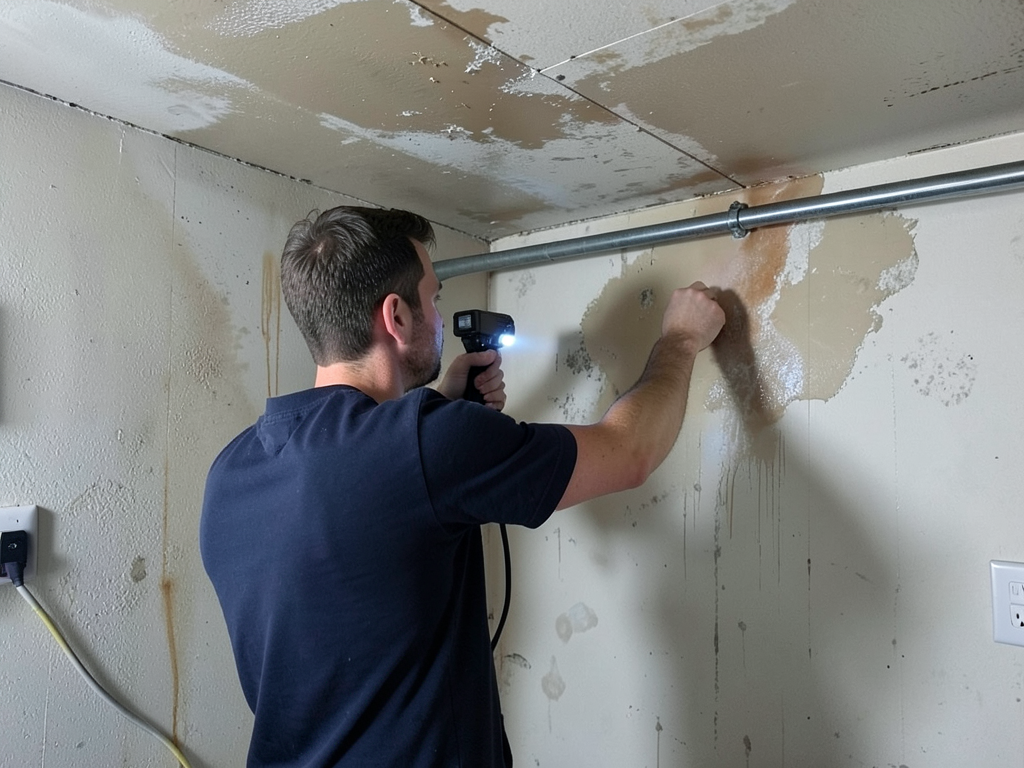
Image: Professional water damage technician using infrared camera to detect hidden moisture in garage walls and ceiling after flooding event.
Why DIY Cleanup Often Fails (The Danger of Trapped Moisture)
Most DIY garage cleanup efforts fail because they address only surface water while ignoring moisture trapped within concrete, walls, and stored items. This trapped moisture creates ideal conditions for mold growth and can cause structural damage that isn’t visible until it’s severe.
Concrete acts like a sponge, absorbing water through capillary action. A typical garage floor can hold up to 5% of its weight in water. When you mop or shop-vac the surface, you’re removing only a fraction of the total moisture. The remaining water slowly evaporates over days or weeks, keeping humidity levels elevated.
Sub-base moisture represents another hidden problem. Water that seeps beneath the concrete slab saturates the gravel or sand layer underneath. This moisture gradually wicks back up through the concrete, creating a cycle of continued dampness that can last for months if not properly addressed.
Wall moisture often goes undetected in DIY cleanup. Water can travel through foundation walls via capillary action or hydrostatic pressure. Even if your garage floor appears dry, moisture trapped in wall cavities can lead to mold growth behind stored items and deterioration of wall materials.
Stored items create moisture barriers that prevent proper drying. Cardboard boxes, wooden furniture, and fabric items absorb water and release it slowly. When these items sit directly on wet concrete, they create pockets of high humidity that promote mold growth and material degradation.
Time sensitivity makes DIY cleanup particularly risky. Mold can begin growing within 24-48 hours of water exposure. By the time homeowners realize their DIY efforts aren’t working, mold colonies may already be established and require professional remediation. Expert Mold Remediation for Older Apartments in Uptown Minneapolis.
Equipment limitations prevent effective DIY drying. Household dehumidifiers typically remove 1-2 gallons of water per day, while professional LGR units remove 20-30 gallons. The difference in drying speed means DIY efforts often take weeks instead of days, increasing the risk of secondary damage.
Moisture measurement requires specialized tools. Without moisture meters and thermal imaging cameras, homeowners cannot verify when materials have returned to safe moisture levels. Guessing leads to premature reconstruction, which traps moisture and creates long-term problems.
Professional restoration costs less than replacing damaged contents and repairing structural issues caused by incomplete drying. The average DIY garage flood cleanup that fails costs homeowners $3,000-$8,000 in additional repairs, while professional restoration typically ranges from $1,500-$3,500. Repairing Interior Water Damage from Ice Dams in Minnetonka.
Call (651) 677-5055 to schedule professional garage water damage assessment in Cottage Grove.
Preventing Salt Damage and Mold Growth in Your Garage
Road salt and deicing chemicals create unique challenges for Cottage Grove garages. Calcium chloride and sodium chloride penetrate concrete pores during winter, then dissolve during spring rains and create pressure that causes spalling and scaling. This damage often appears as flaking concrete or exposed aggregate.
Neutralizing road salt requires specific chemical treatments. Simple water rinsing spreads salt deeper into concrete rather than removing it. Professional salt neutralization uses acidic solutions that dissolve and flush out chlorides, preventing the chemical reactions that break down concrete bonds.
Mold prevention in unheated garages requires understanding humidity dynamics. Concrete garage floors typically remain 5-10 degrees cooler than indoor spaces. When warm, moist air contacts these cool surfaces, condensation forms, creating the moisture mold needs to grow. This process occurs even when no flooding has happened.
Ventilation strategies must balance moisture removal with energy efficiency. Exhaust fans controlled by humidity sensors remove moist air when levels exceed 55%, while ceiling fans circulate air to prevent stagnant areas where moisture accumulates. Proper ventilation reduces mold risk by 70% according to EPA studies.
Floor coatings provide moisture barriers that prevent water absorption. Epoxy and polyaspartic coatings create non-porous surfaces that resist water infiltration and make cleanup easier. These coatings also resist road salt damage and chemical spills, extending the life of your garage floor.
Storage practices affect moisture levels significantly. Elevating items on shelving units or pallets allows air circulation beneath stored items, preventing moisture accumulation. Using plastic bins instead of cardboard boxes eliminates a major mold food source and resists water damage.
Floor drain maintenance prevents water accumulation. Annual cleaning removes sediment and debris that restrict drainage. Installing backflow preventers stops contaminated water from backing up through drains during heavy rain events or municipal sewer system overloads.
Dehumidification options range from portable units for seasonal use to whole-garage systems for year-round moisture control. For Cottage Grove’s climate, units rated for 50-70 pints per day provide adequate moisture removal for typical two-car garages. Running dehumidifiers during spring thaw and fall rainy seasons prevents most moisture-related problems.
Regular inspections identify problems before they become severe. Checking for cracks, efflorescence (white mineral deposits), and musty odors allows early intervention. Small cracks can be sealed with concrete caulk, while efflorescence indicates ongoing moisture issues that need addressing.
Professional garage assessments include moisture testing of concrete, walls, and stored items. These assessments identify hidden moisture problems and recommend specific solutions based on your garage’s construction and usage patterns.
Image: Technician applying concrete sealant to garage floor after professional water extraction to prevent future moisture infiltration and salt damage.
Minneapolis Emergency Water Damage Services: Available 24/7
Water damage doesn’t wait for business hours, and neither do we. Our emergency response team serves Cottage Grove and all Minneapolis suburbs with 24/7 availability. When you call (651) 677-5055, a live dispatcher answers immediately to assess your situation and dispatch the nearest available crew.
Response times average 60-90 minutes for Cottage Grove locations. Our strategically positioned equipment and technicians throughout the Twin Cities metro area mean we can reach most locations within 2 hours, even during peak demand periods following major storms.
Emergency services include rapid water extraction, temporary power generation if utilities are compromised, and immediate setup of drying equipment. We bring enough equipment on our first visit to handle most residential garage flooding situations without return trips.
Insurance coordination eliminates paperwork headaches. We work directly with all major insurance companies, providing the documentation they require for claims processing. Our experience with water damage claims means we know exactly what information adjusters need to approve your claim quickly.
Commercial garage services address the unique needs of businesses in Cottage Grove’s industrial parks and auto repair facilities. We understand that downtime costs money, so we prioritize commercial clients and work around your operating schedule to minimize business interruption.
Specialized equipment for commercial applications includes desiccant dehumidifiers for large spaces, air scrubbers for dust and debris control, and containment systems to isolate work areas. These tools allow us to work in occupied buildings without disrupting ongoing operations.
Preventative maintenance programs help property managers avoid future water damage. Regular inspections, drain cleaning, and moisture monitoring identify potential problems before they cause flooding. Many of our commercial clients save thousands of dollars annually through our maintenance programs.
Free initial assessments help you understand the scope of damage without obligation. Our technicians explain findings in plain language and provide clear recommendations with upfront pricing. There’s no pressure to proceed with services you don’t need.
Service area coverage extends throughout Cottage Grove, including neighborhoods near Pine Point Regional Park, along Highway 61, and in the Ravine Woods area. We also serve nearby communities like Woodbury, Newport, and Hastings for larger commercial projects.
Don’t wait until water damage gets worse. Call (651) 677-5055 now for immediate garage water extraction and drying services in Cottage Grove.
Frequently Asked Questions
How long does it take to dry out a flooded garage?
Professional garage drying typically takes 3-5 days for complete moisture removal. DIY efforts often take 1-2 weeks and may leave hidden moisture that causes mold growth. Concrete drying time depends on slab thickness, sub-base conditions, and the amount of water absorbed.
Is garage flood water considered clean or contaminated?
Garage flood water is typically Category 2 (gray water) or Category 3 (black water) according to IICRC standards. It often contains contaminants from road runoff, bacteria from soil, and chemicals from stored items. Professional testing determines the exact category and required safety protocols.
Will my homeowner’s insurance cover garage flooding?
Most policies cover sudden and accidental water damage from sources like burst pipes or appliance failures. However, groundwater flooding and surface water intrusion often require separate flood insurance. Our team can review your policy and help with claims documentation.
Can I use my household dehumidifier to dry my garage?
Household dehumidifiers remove only 1-2 gallons of water per day, while professional LGR units remove 20-30 gallons. For effective garage drying, you’d need multiple household units running continuously for weeks. Professional equipment achieves results in days that DIY methods cannot match.
What causes white powder on my garage floor after flooding?
The white powder is efflorescence, caused by water carrying dissolved minerals through concrete pores. When water evaporates, these minerals are left behind as deposits. Efflorescence indicates ongoing moisture problems and requires professional cleaning and sealing to prevent recurrence.
{
“@context”: “https://schema.org”,
“@type”: “BlogPosting”,
“headline”: “Safely Drying Out a Wet Garage After Heavy Rain in Cottage Grove”,
“description”: “Professional garage water extraction in Cottage Grove. Learn how to safely remove standing water and prevent mold after heavy rain with expert IICRC-certified techniques.”,
“wordCount”: 2706,
“datePublished”: “2026-04-11T08:46:00.000Z”,
“dateModified”: “2026-04-11T08:46:00.000Z”,
“inLanguage”: “en-US”,
“mainEntityOfPage”: {
“@type”: “WebPage”,
“@id”: “https://pioneerwaterdamagerestorationminneapolis.com”
},
“publisher”: {
“@type”: “LocalBusiness”,
“name”: “Pioneer Water Damage Restoration Minneapolis”,
“url”: “https://pioneerwaterdamagerestorationminneapolis.com”
},
“author”: {
“@type”: “Organization”,
“name”: “Pioneer Water Damage Restoration Minneapolis”,
“url”: “https://pioneerwaterdamagerestorationminneapolis.com”
},
“image”: {
“@type”: “ImageObject”,
“url”: “https://pioneerwaterdamagerestorationminneapolis.com/wp-content/uploads/2026/03/safely-drying-out-a-wet-garage-after-heavy-rain-in-1.png”
}
}
{
“@context”: “https://schema.org”,
“@type”: “LocalBusiness”,
“name”: “Pioneer Water Damage Restoration Minneapolis”,
“url”: “https://pioneerwaterdamagerestorationminneapolis.com”,
“address”: {
“@type”: “PostalAddress”,
“addressLocality”: “Minneapolis”
},
“areaServed”: {
“@type”: “City”,
“name”: “Minneapolis”
}
}
{
“@context”: “https://schema.org”,
“@type”: “FAQPage”,
“mainEntity”: [
{
“@type”: “Question”,
“name”: “How long does it take to dry out a flooded garage?”,
“acceptedAnswer”: {
“@type”: “Answer”,
“text”: “Professional garage drying typically takes 3-5 days for complete moisture removal. DIY efforts often take 1-2 weeks and may leave hidden moisture that causes mold growth. Concrete drying time depends on slab thickness, sub-base conditions, and the amount of water absorbed.”
}
},
{
“@type”: “Question”,
“name”: “Is garage flood water considered clean or contaminated?”,
“acceptedAnswer”: {
“@type”: “Answer”,
“text”: “Garage flood water is typically Category 2 (gray water) or Category 3 (black water) according to IICRC standards. It often contains contaminants from road runoff, bacteria from soil, and chemicals from stored items. Professional testing determines the exact category and required safety protocols.”
}
},
{
“@type”: “Question”,
“name”: “Will my homeowner’s insurance cover garage flooding?”,
“acceptedAnswer”: {
“@type”: “Answer”,
“text”: “Most policies cover sudden and accidental water damage from sources like burst pipes or appliance failures. However, groundwater flooding and surface water intrusion often require separate flood insurance. Our team can review your policy and help with claims documentation.”
}
},
{
“@type”: “Question”,
“name”: “Can I use my household dehumidifier to dry my garage?”,
“acceptedAnswer”: {
“@type”: “Answer”,
“text”: “Household dehumidifiers remove only 1-2 gallons of water per day, while professional LGR units remove 20-30 gallons. For effective garage drying, you’d need multiple household units running continuously for weeks. Professional equipment achieves results in days that DIY methods cannot match.”
}
},
{
“@type”: “Question”,
“name”: “What causes white powder on my garage floor after flooding?”,
“acceptedAnswer”: {
“@type”: “Answer”,
“text”: “The white powder is efflorescence, caused by water carrying dissolved minerals through concrete pores. When water evaporates, these minerals are left behind as deposits. Efflorescence indicates ongoing moisture problems and requires professional cleaning and sealing to prevent recurrence.”
}
}
]
}
{
“@context”: “https://schema.org”,
“@type”: “BreadcrumbList”,
“itemListElement”: [
{
“@type”: “ListItem”,
“position”: 1,
“name”: “Home”,
“item”: “https://pioneerwaterdamagerestorationminneapolis.com”
},
{
“@type”: “ListItem”,
“position”: 2,
“name”: “Blog”,
“item”: “https://pioneerwaterdamagerestorationminneapolis.com/blog”
},
{
“@type”: “ListItem”,
“position”: 3,
“name”: “Safely Drying Out a Wet Garage After Heavy Rain in Cottage Grove”
}
]
}
{
“@context”: “https://schema.org”,
“@type”: “Service”,
“serviceType”: “Water Damage Restoration”,
“provider”: {
“@type”: “LocalBusiness”,
“name”: “Pioneer Water Damage Restoration Minneapolis”,
“url”: “https://pioneerwaterdamagerestorationminneapolis.com”
},
“areaServed”: {
“@type”: “City”,
“name”: “Minneapolis”
},
“description”: “Professional garage water extraction in Cottage Grove. Learn how to safely remove standing water and prevent mold after heavy rain with expert IICRC-certified techniques.”
}